What is Backrest and how does it relate to Restic?
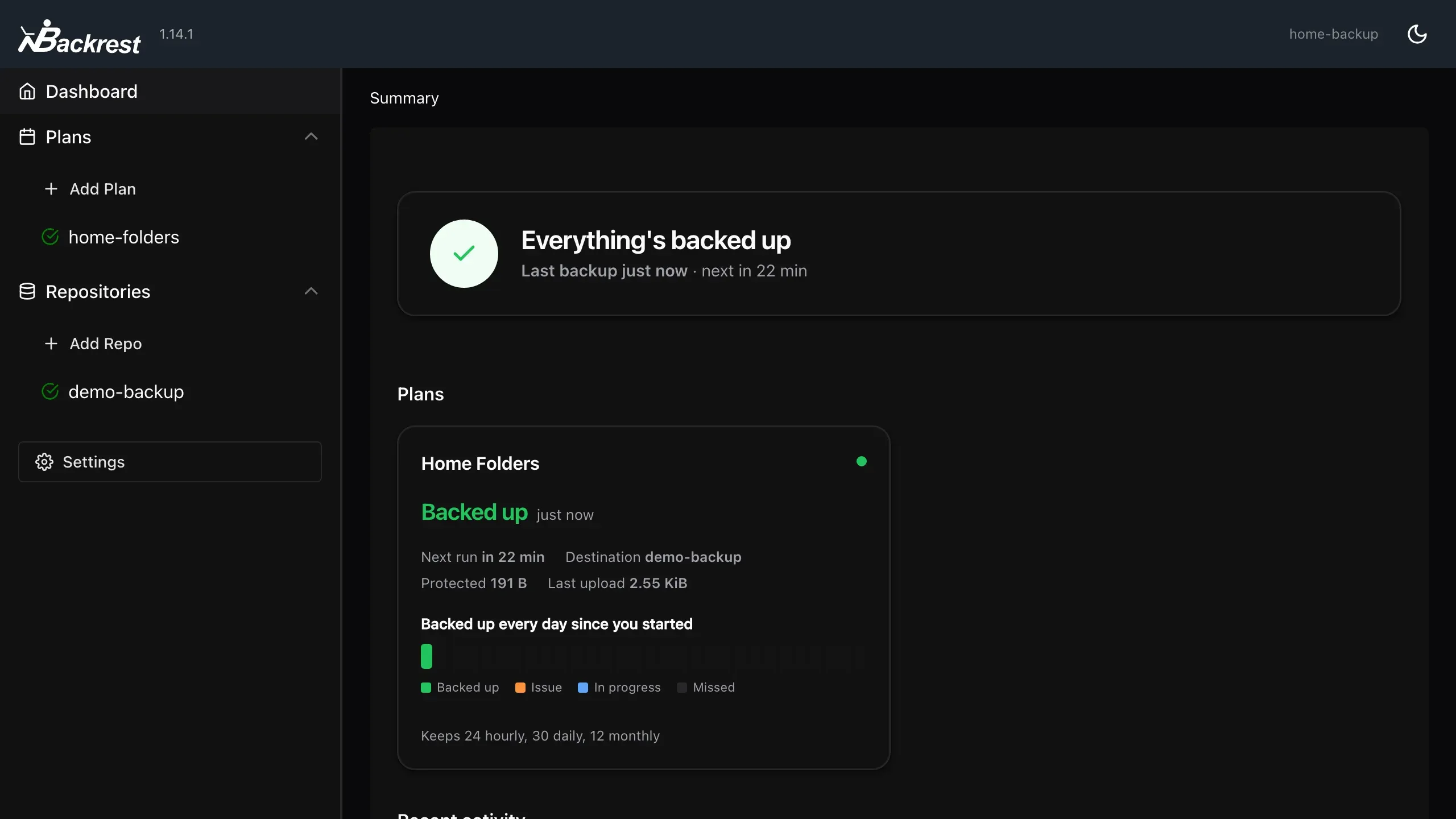
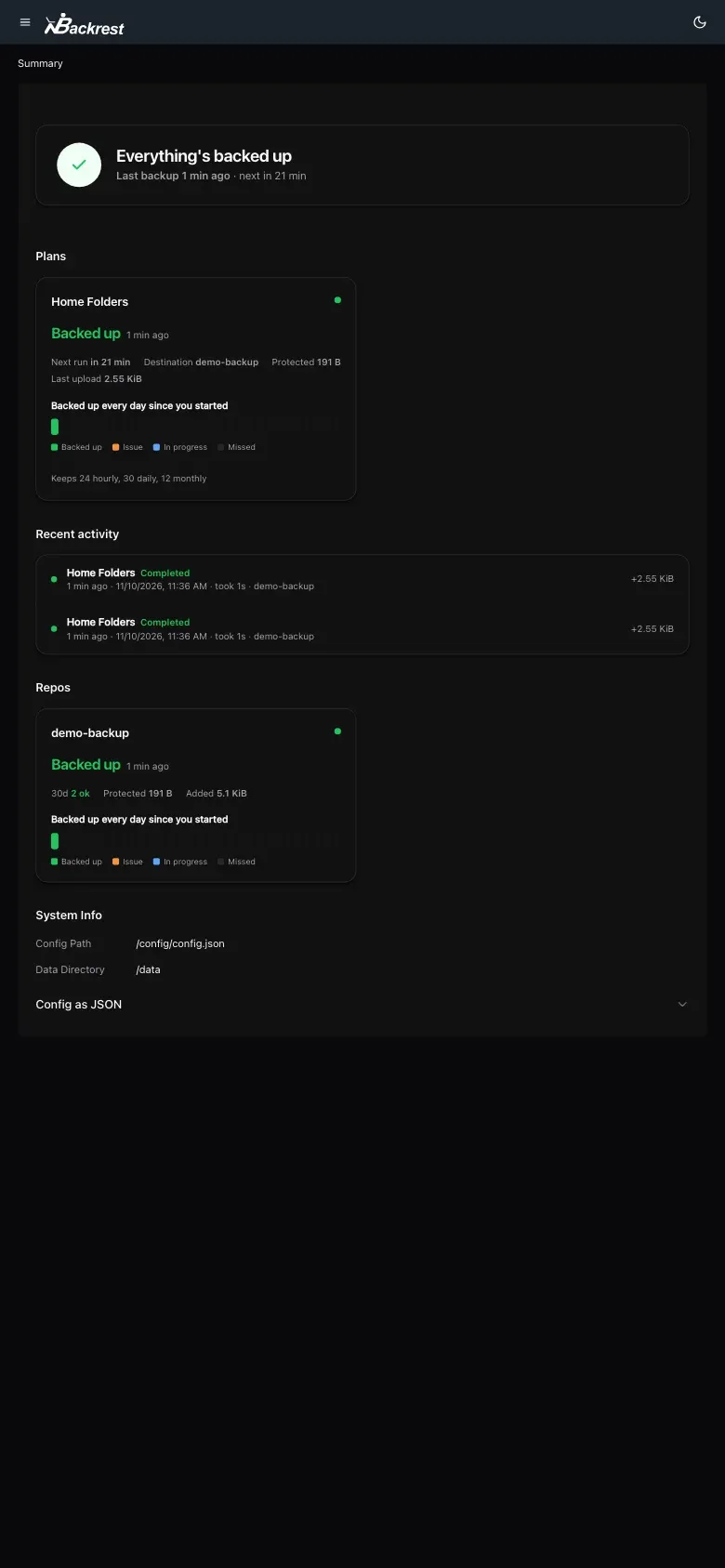
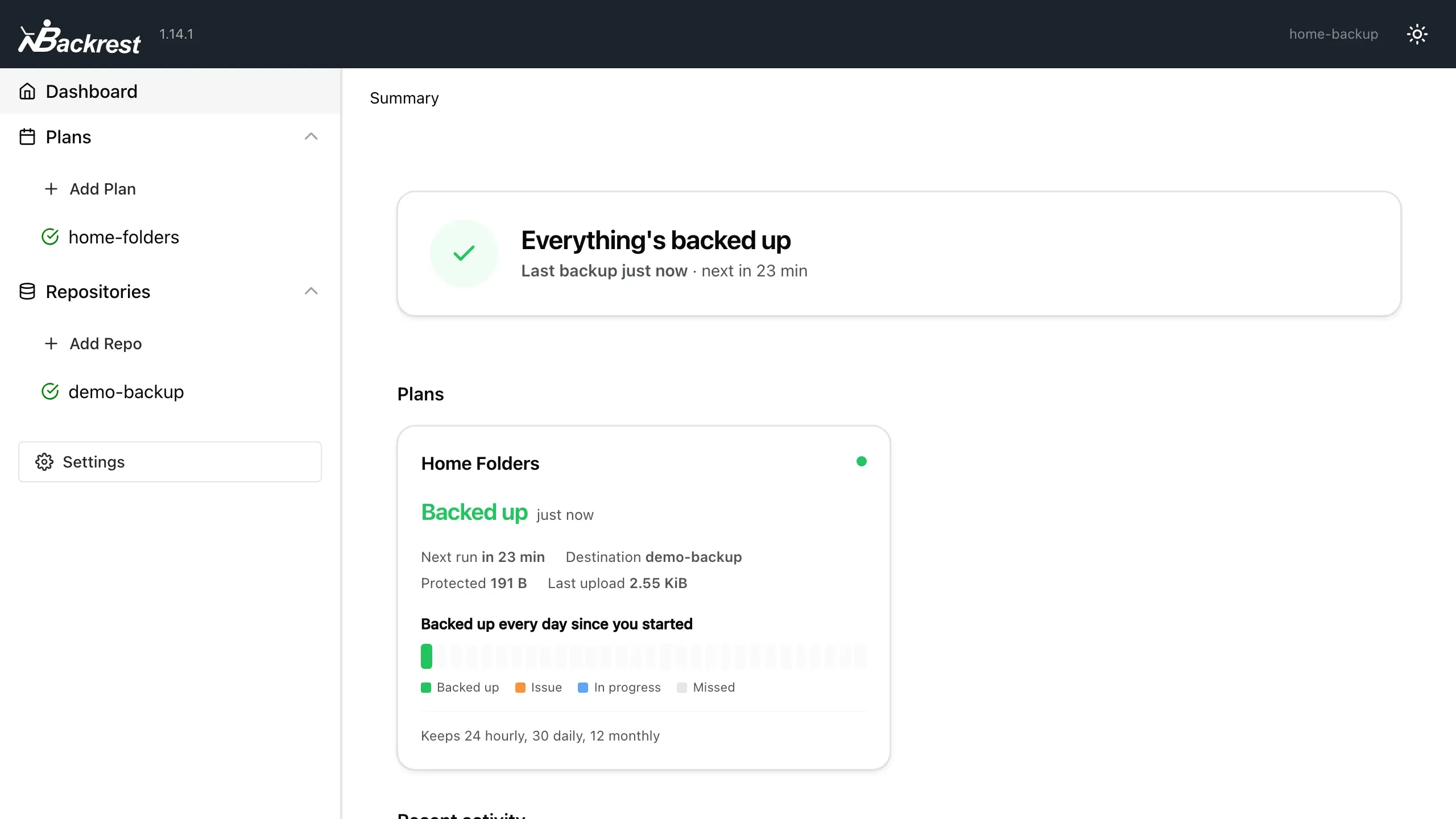
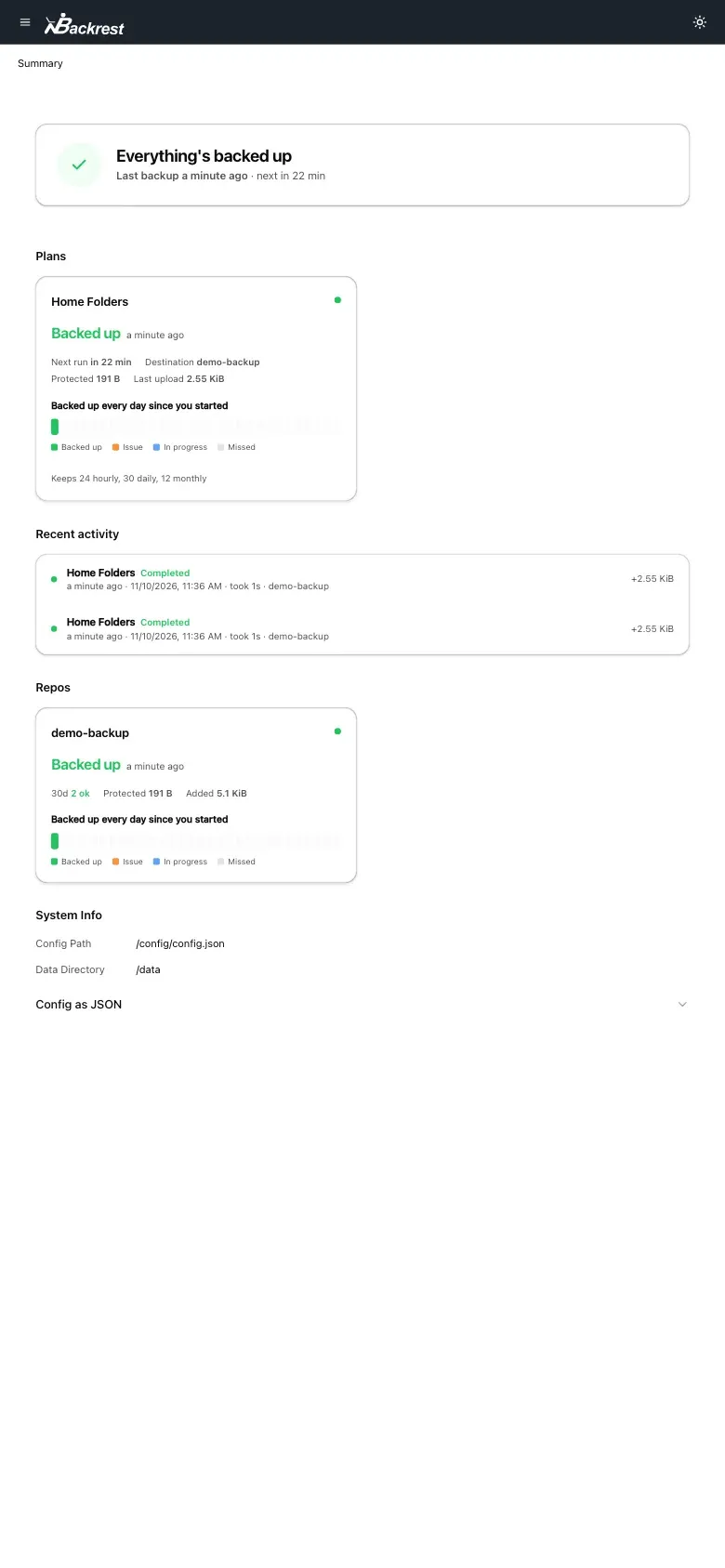
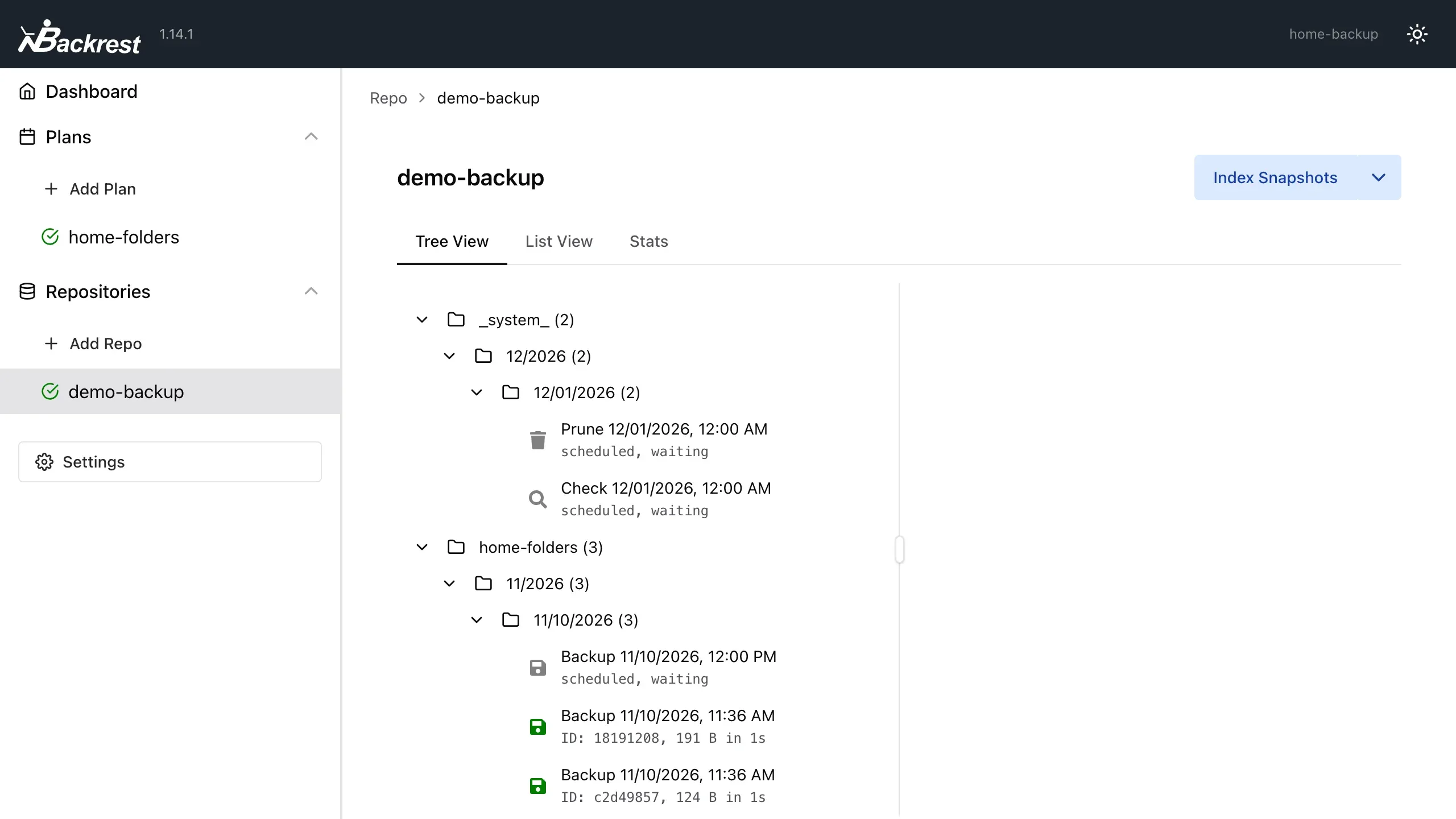
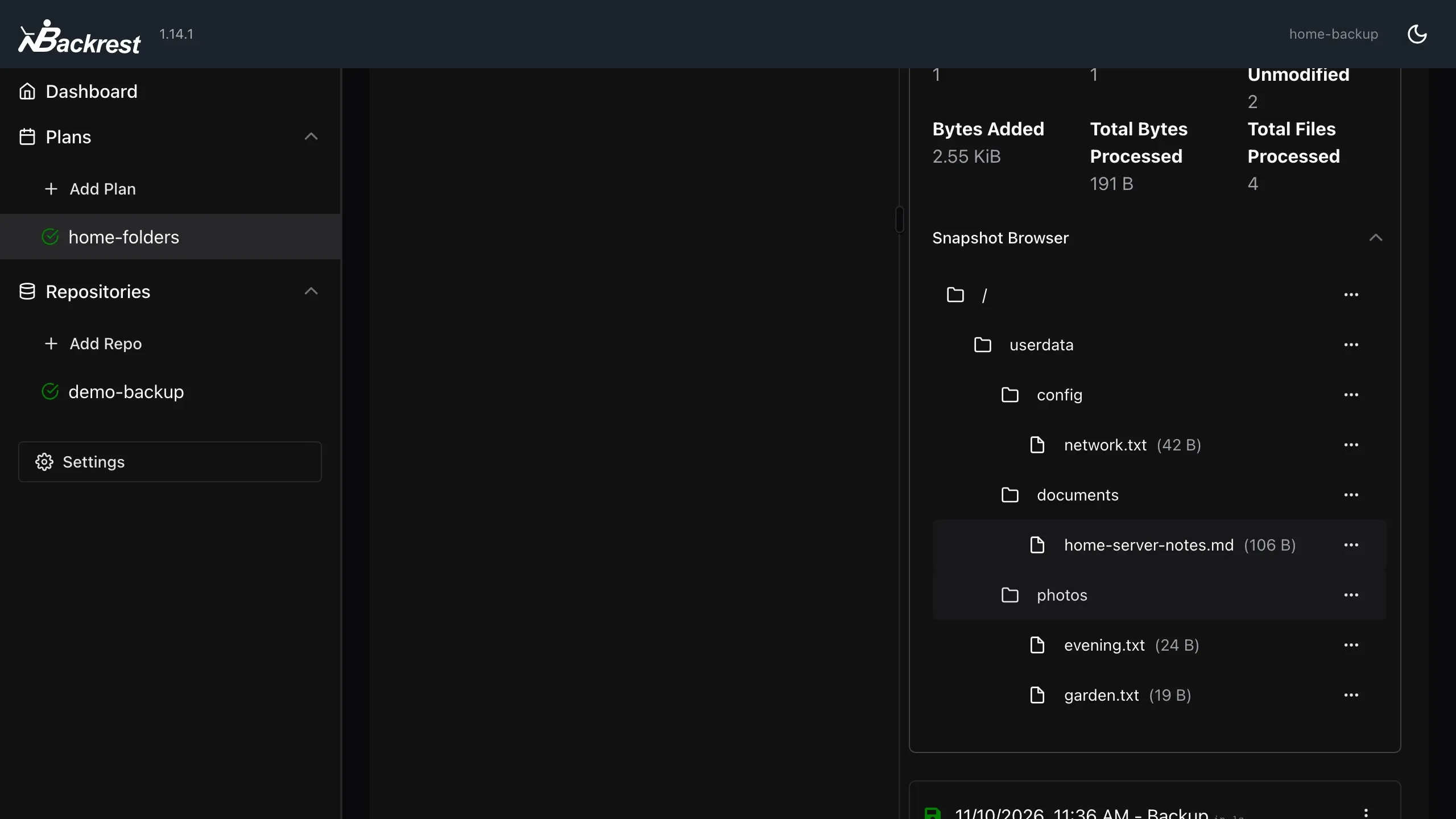
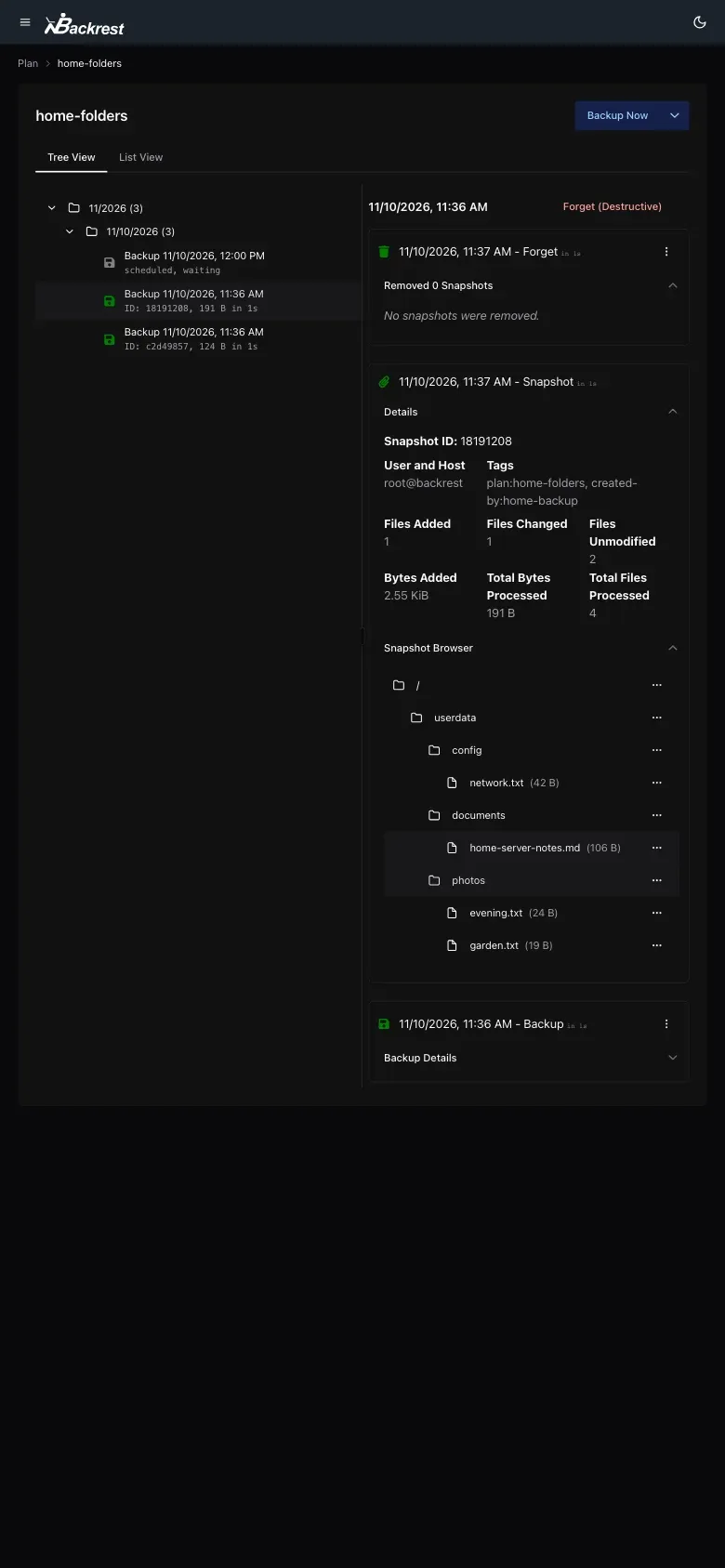
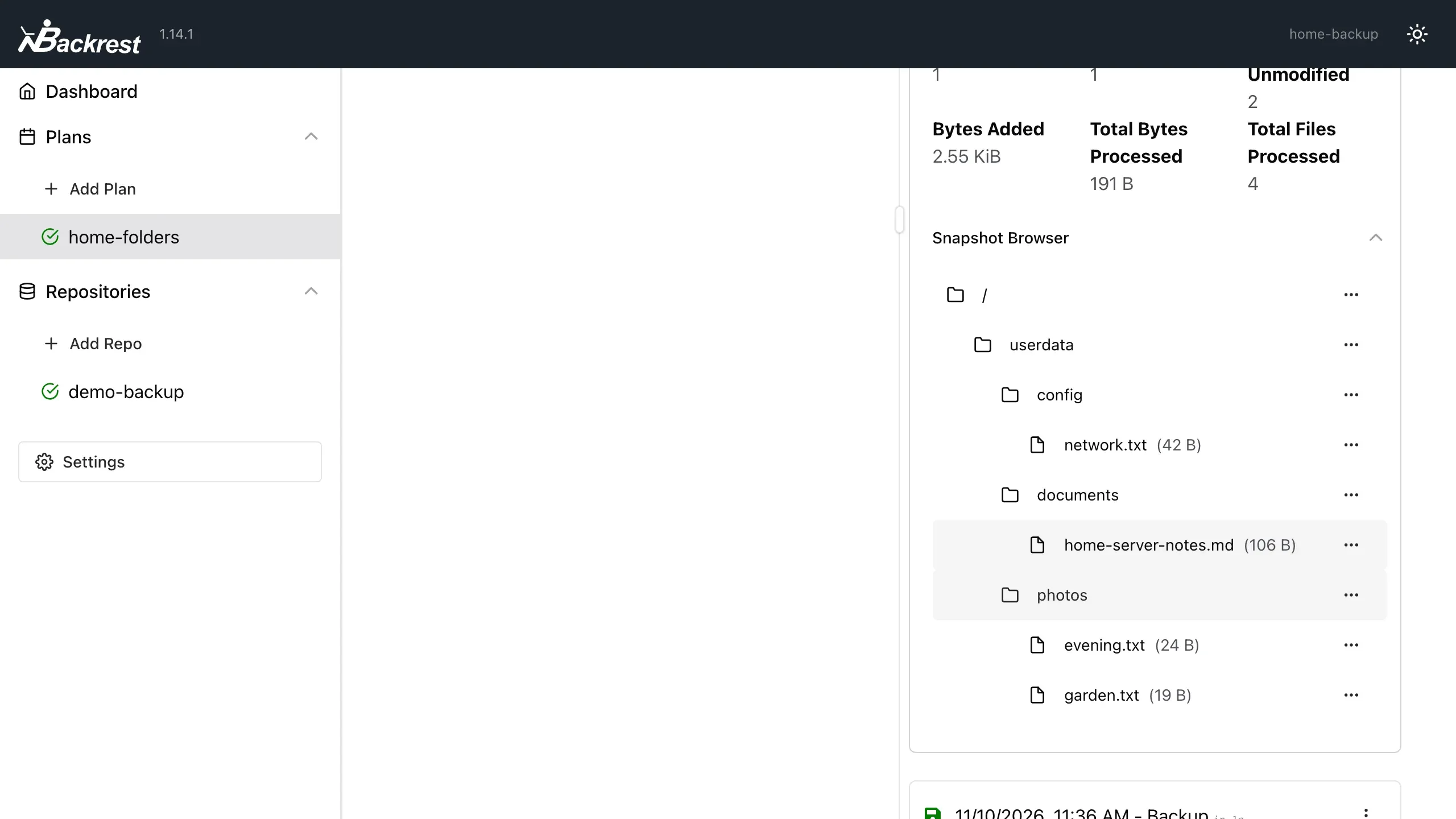
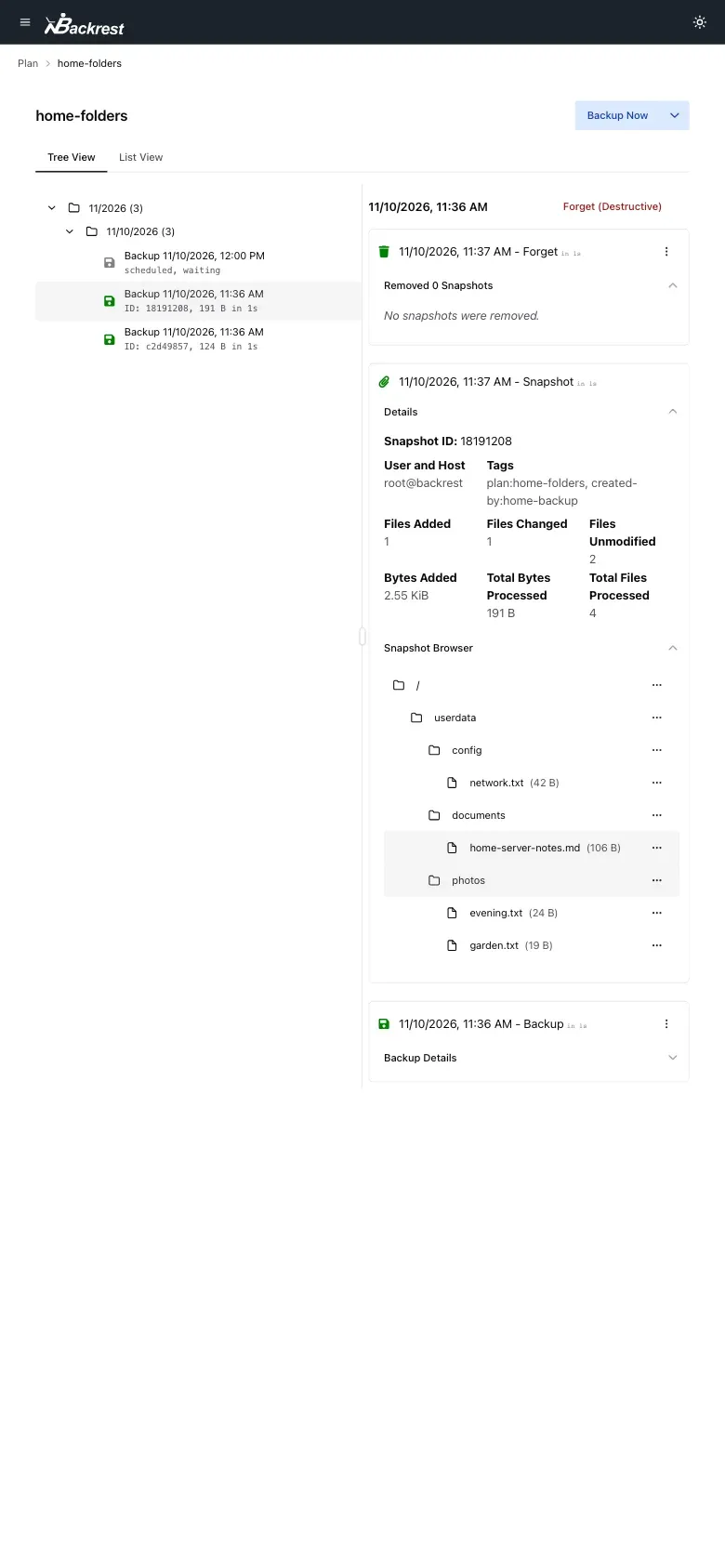
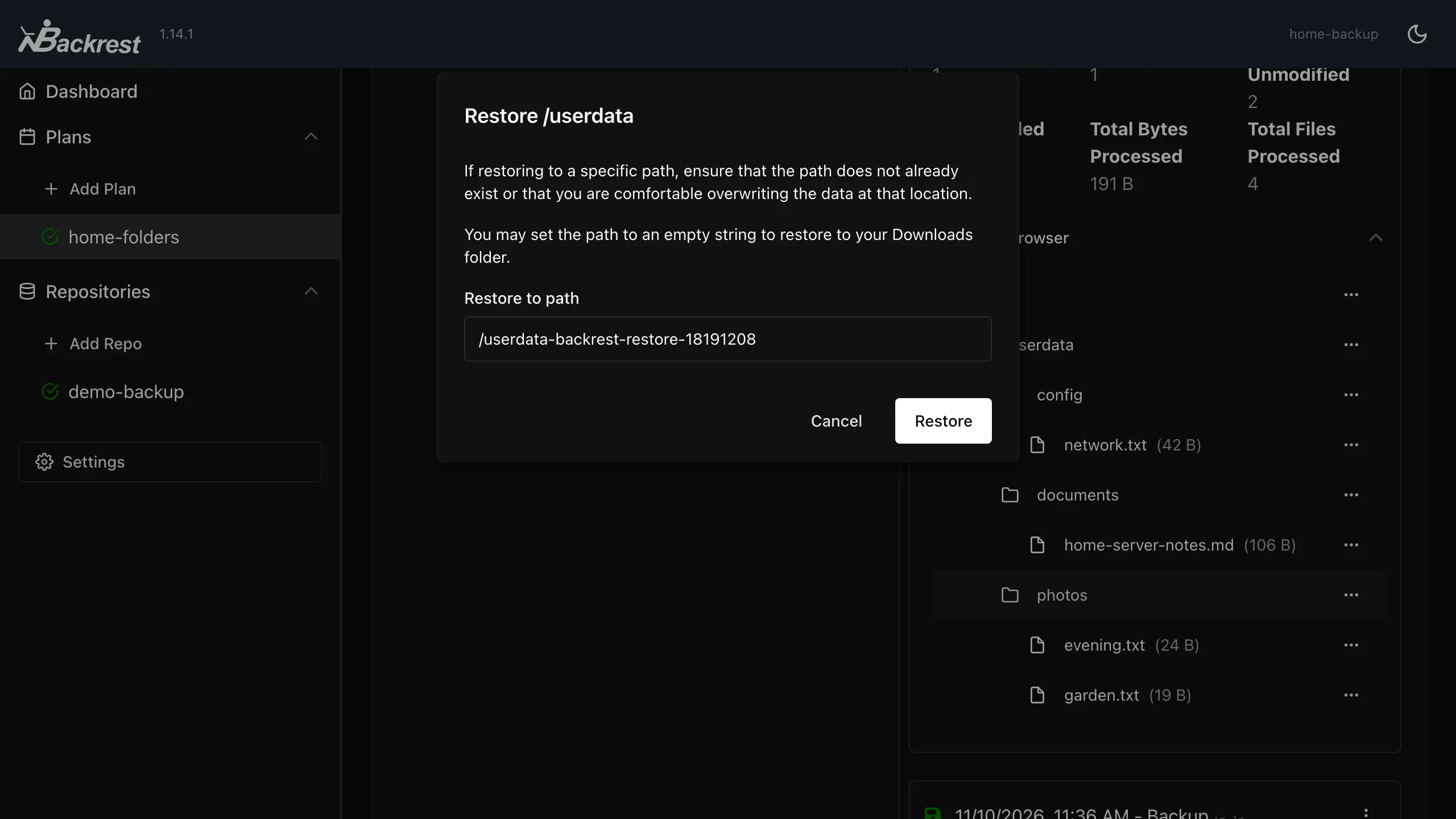
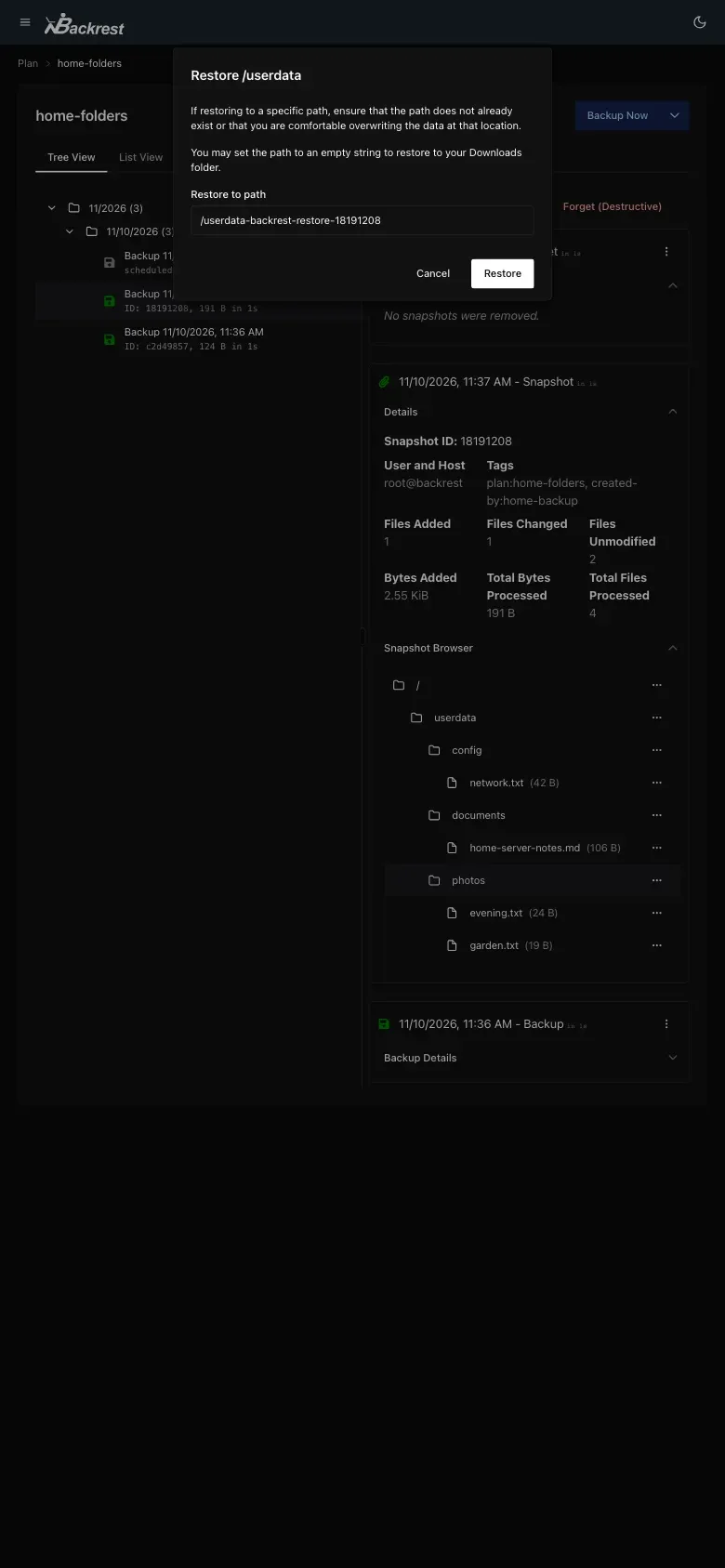
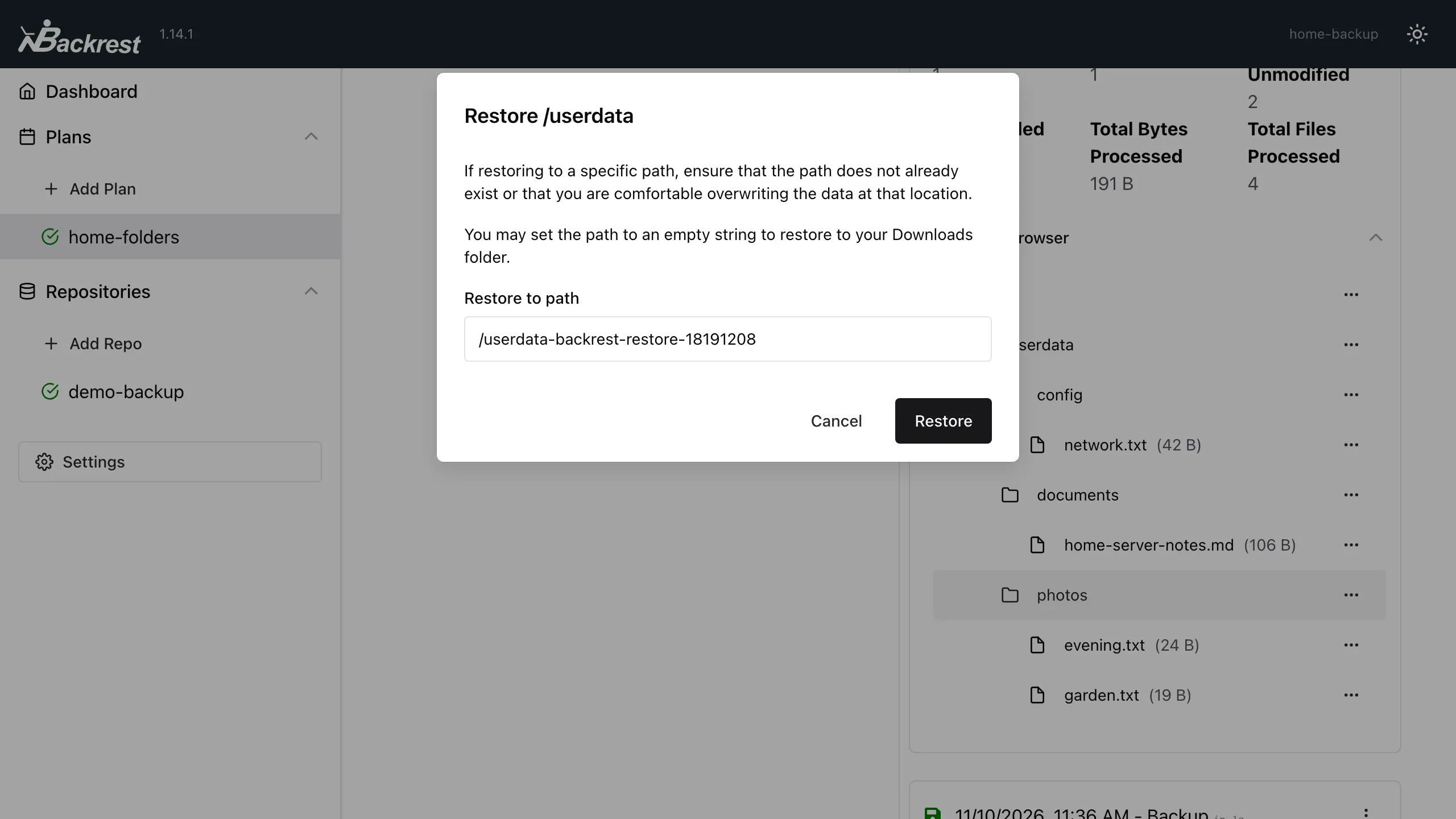
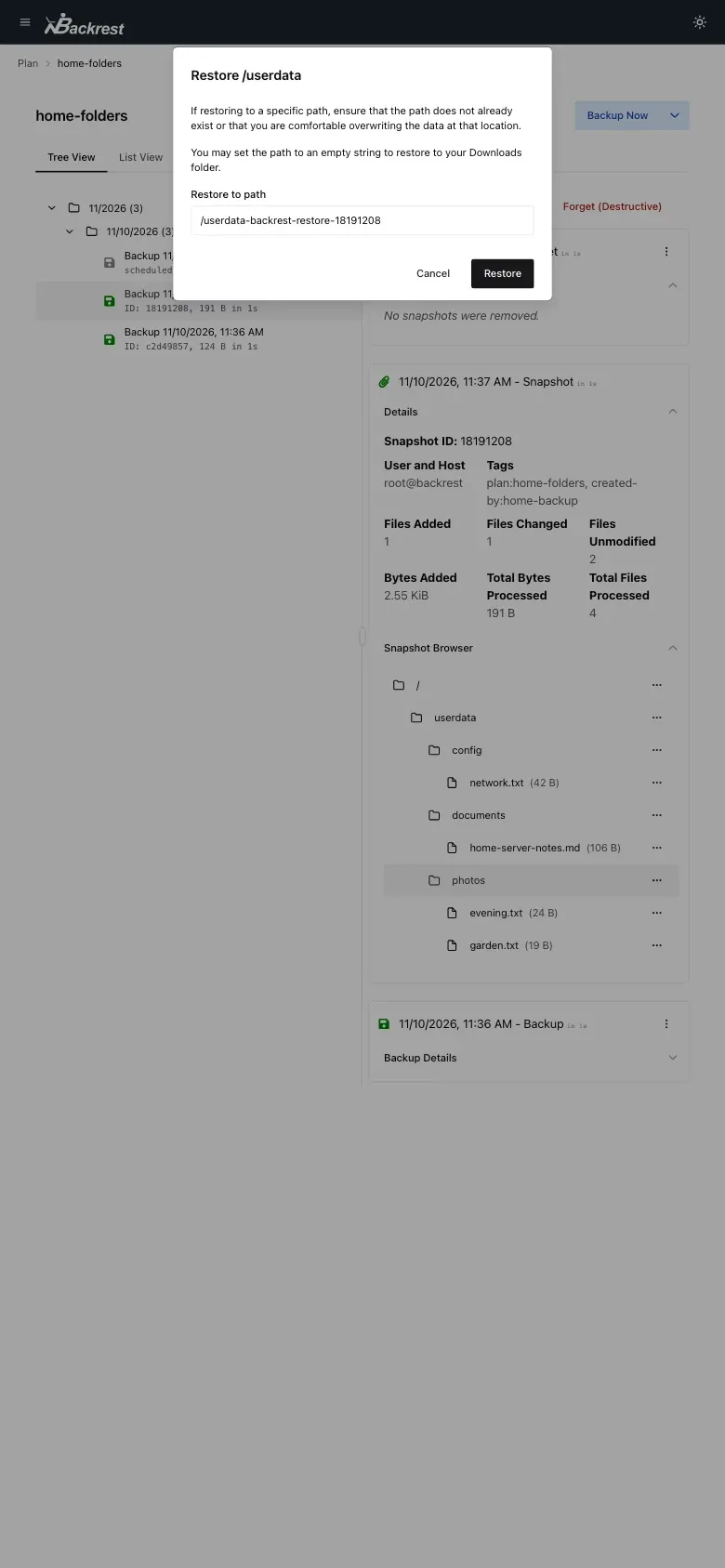
Backrest is a web interface and scheduler built on top of Restic. Restic does the actual backups, while Backrest adds plans, schedules, retention policies, a snapshot browser and one-click restores.

Schedule, browse and restore Restic backups from a web dashboard. Targets include S3, Backblaze B2 and SFTP, plus anything rclone can reach.
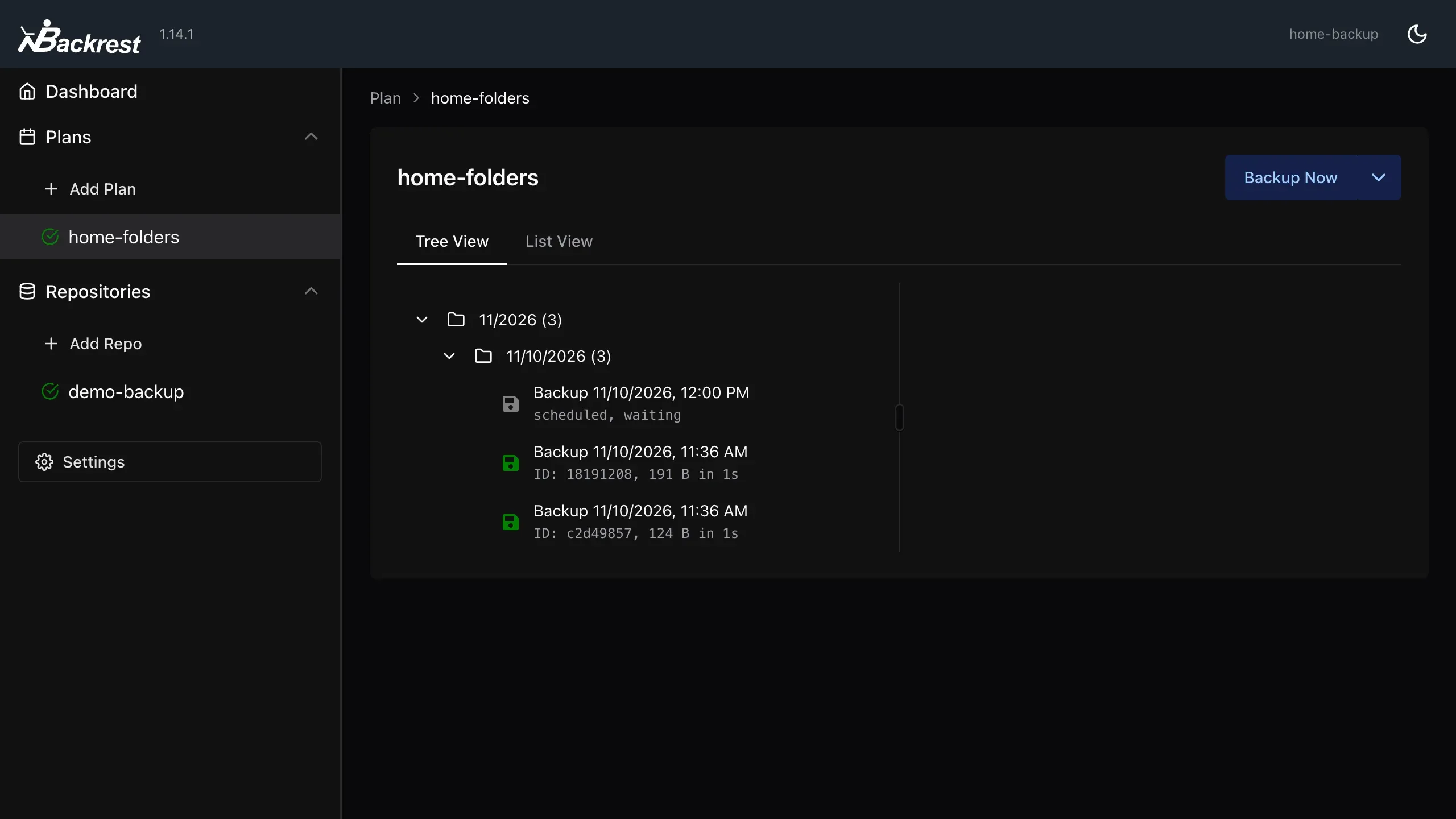

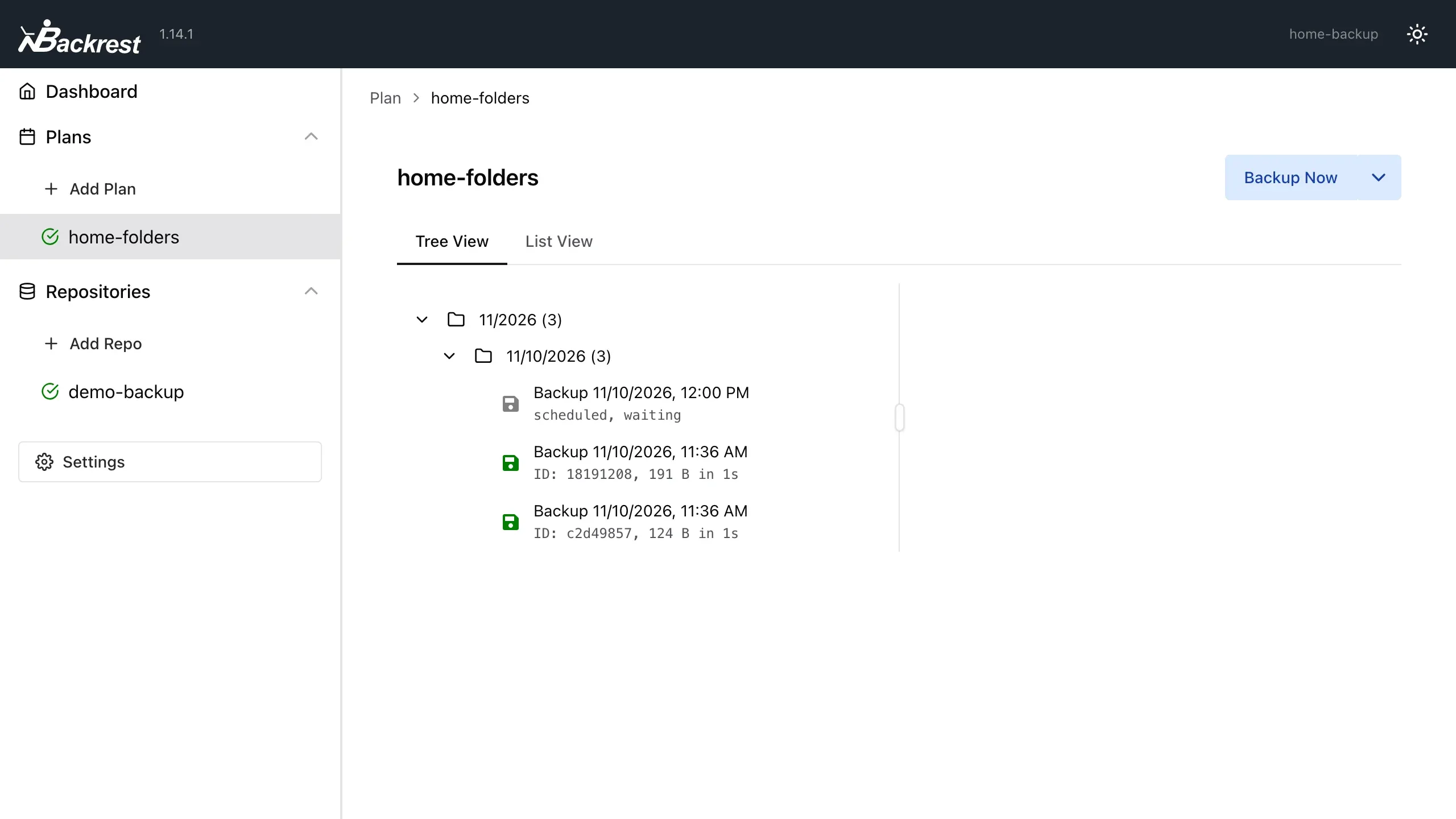

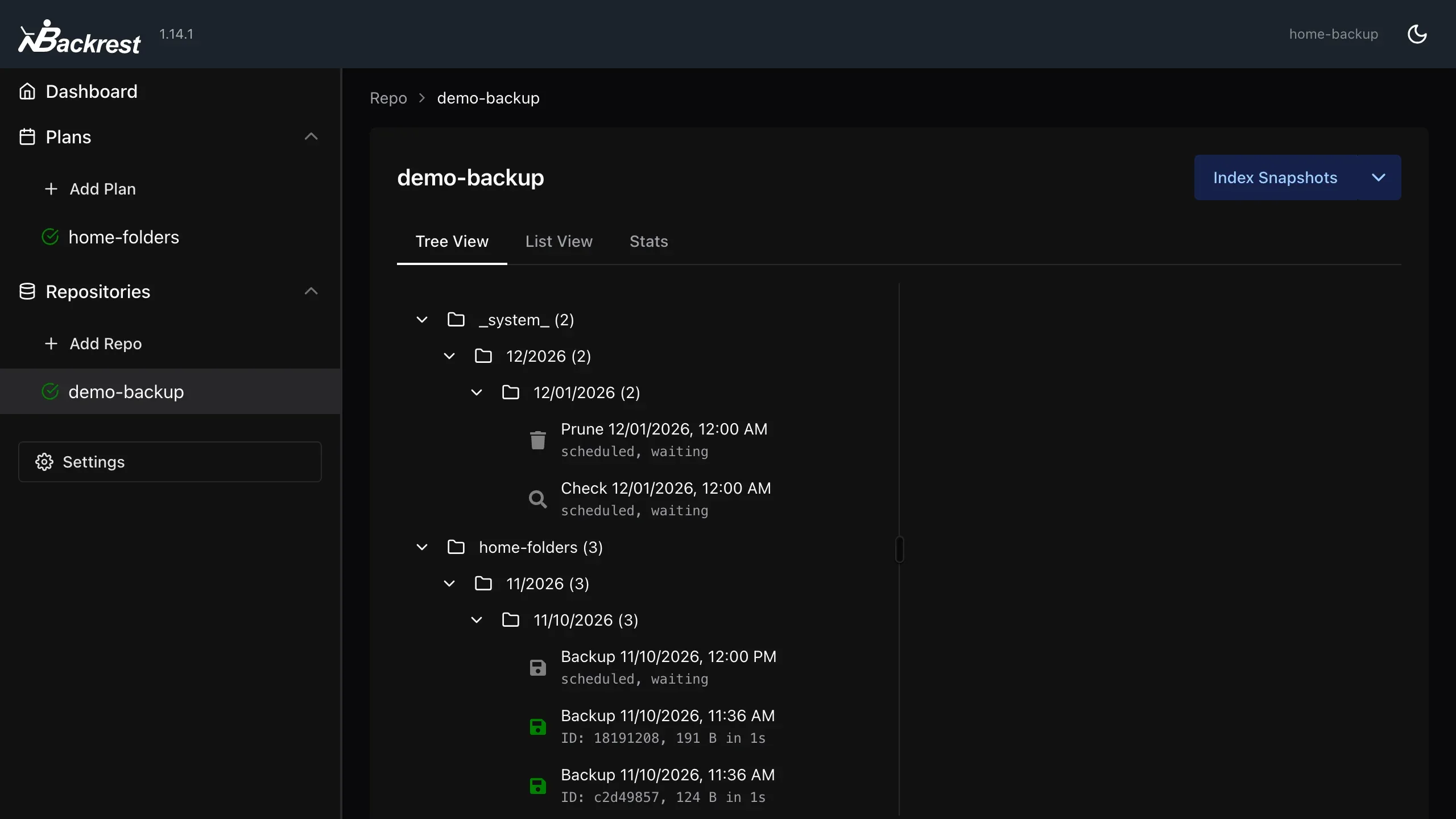
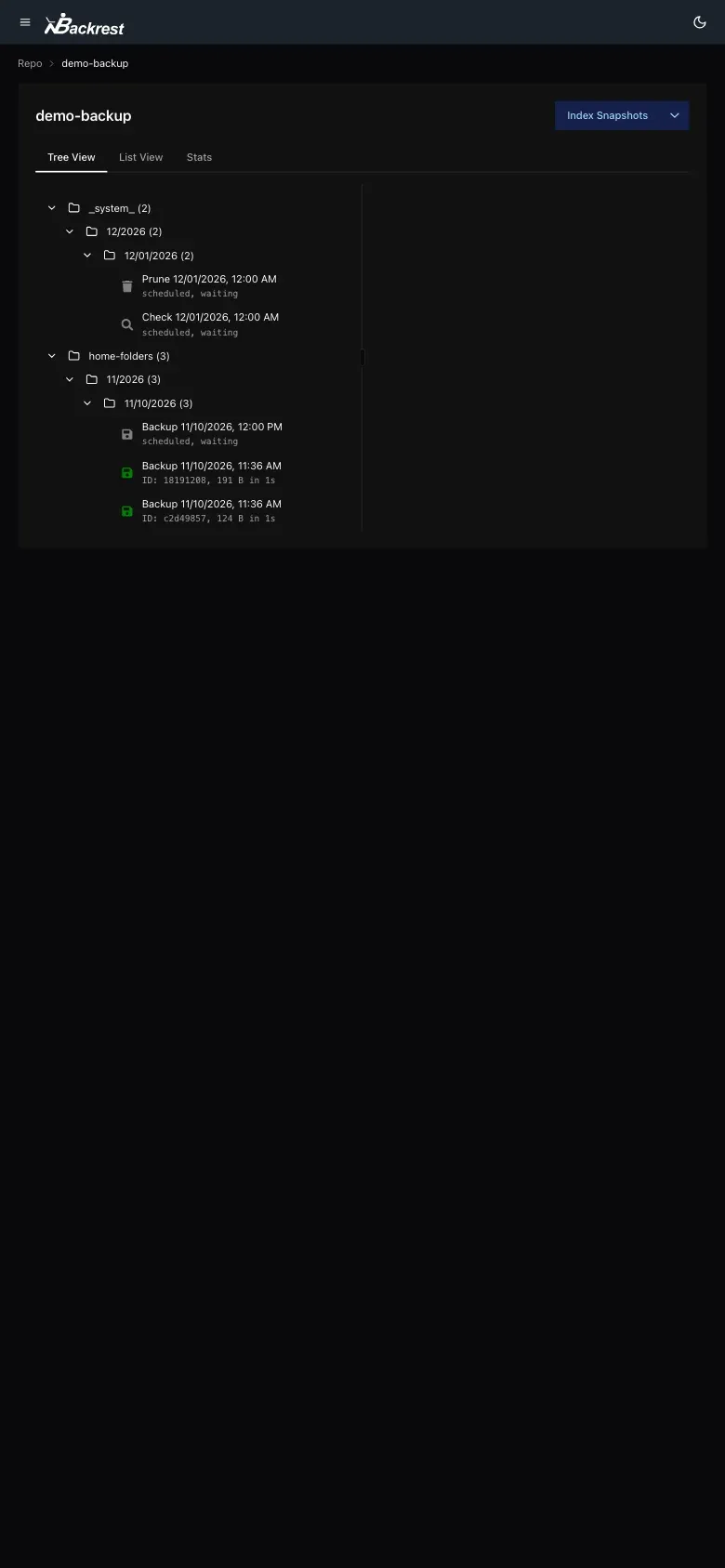

Compare Backrest with other backup apps. Add or remove apps to see how they differ.
| Requirement | Backrest | ||||||
|---|---|---|---|---|---|---|---|
| Price | Free | Free + Paid | Free + Paid | Free | Free | Free | Free |
| Licence | GPL-3.0 | MIT | Custom | Apache-2.0 | AGPL-3.0 | BSD-3-Clause | GPL-3.0 |
| Concurrent backups | Sequential / locked | – | Lock-free | Lock-free | – | Sequential / locked | Sequential / locked |
| Storage support | Local, SFTP, S3, B2, rclone | Local, SFTP, S3, B2, WebDAV | Local, SFTP, S3, B2 | Local, SFTP, S3, B2, WebDAV | Local, S3, B2, SFTP | Local, SSH | Local, SSH |
| Notifications | Discord, Slack, Gotify, Shoutrrr, Healthchecks | Email, Webhooks, Telegram | Email, Webhooks | Email, Webhooks, Pushover | Discord, Slack, Gotify, ntfy, Email, Webhooks | – | Apprise, Healthchecks, ntfy, Pushover, Uptime Kuma, Zabbix |
| Deduplication | Yes (per repository) | Yes (per repository) | Global | Yes (per repository) | Yes (per repository) | Yes (per repository) | Yes (per repository) |
| Web UI | Yes | Yes | Yes | Yes | Yes | – | – |
| Docker Containers | 1 (app only) | 1 (app only) | 1 (app only) | 1 (app only) | 1 (app only) | 1 (app only) | 1 (app only) |
| Database | SQLite | SQLite | none | none | SQLite | none | none |
| Architecture | x86 + ARM | x86 + ARM | x86 + ARM | x86 + ARM | x86 + ARM | x86 + ARM | x86 + ARM |
| Tech stack | Go | .NET | Go | Go | Bun | Python | Python |
| Docker | Yes | Yes | Yes | Yes | Yes | Yes | Yes |
| Linux package | Yes | Yes | Yes | Yes | – | Yes | Yes |
| Windows | Yes | Yes | Yes | Yes | – | – | – |
| macOS | Yes | Yes | Yes | Yes | – | Yes | Yes |
| Windows | – | Yes | Yes | Yes | – | – | – |
| macOS | – | Yes | Yes | Yes | – | – | – |
| Linux | – | Yes | Yes | Yes | – | – | – |
Compare | |||||||
| Full comparison | This app | Backrest vs Duplicati | Backrest vs Duplicacy | Backrest vs Kopia | Backrest vs Zerobyte | Backrest vs Borg | Backrest vs borgmatic |
Backrest is a web interface and scheduler built on top of Restic. Restic does the actual backups, while Backrest adds plans, schedules, retention policies, a snapshot browser and one-click restores.
Anywhere Restic supports, including local disks, SFTP, S3-compatible storage, Backblaze B2 and any remote that rclone can reach. You can use more than one repository and give each its own plan.
Yes. Backrest uses standard Restic repositories, so you can browse and restore the same data with the Restic command line if Backrest is ever unavailable. Keep your repository password somewhere safe, because the backups cannot be decrypted without it.

Back up to local drives, cloud storage or SFTP with lock-free deduplication.

Back up folders as encrypted, deduplicated snapshots from the command line or a desktop app on Linux, macOS and Windows. A repository can sit on a local disk, a NAS, SFTP, S3 or Backblaze B2. Server mode lets several machines share one.

Schedule encrypted Restic backups from a web interface, covering local folders plus NFS, SMB, WebDAV or SFTP shares. Restore single files or whole folders from any snapshot. Repositories can sit on a local disk, S3, Backblaze B2, a Restic REST server or any rclone target.

Duplicati takes encrypted, deduplicated backups of the folders you pick. Point a job at a local drive, a NAS, an SFTP server or cloud storage, and it keeps versions you can restore from the browser. One container runs the backup engine and the web UI.

Borg packs a folder into a compressed, encrypted archive and stores only the chunks it has not seen before, so the second run is a fraction of the size of the first. Repositories live on a local disk or on a host you reach over SSH, and any archive can be mounted and browsed like a folder.

Write one YAML file describing what to back up, and borgmatic runs Borg for you: create an archive, prune old ones, compact the repository and check it. It also dumps Postgres, MySQL, MariaDB, MongoDB, SQLite, InfluxDB and OpenLDAP first, so the archive holds a consistent copy rather than a half-written database file.

Point restic at a folder and it writes an encrypted, deduplicated snapshot to a local disk, an SSH box, S3 or a rest-server. You run it from cron or a systemd timer, and the repository it leaves behind can be opened later by Backrest, by another restic install or by a rest-server on a different machine.

Back up the databases behind your home apps, such as Postgres, MySQL and MongoDB, from one dashboard to local disks, S3, SFTP or Google Drive.