Is Immich free?
Yes. Immich is free and open source under AGPL-3.0. All features are available without payment; optional product keys support development.

Ditch Google Photos for a FOSS library with automatic phone backup and facial recognition, all kept on your own hardware.
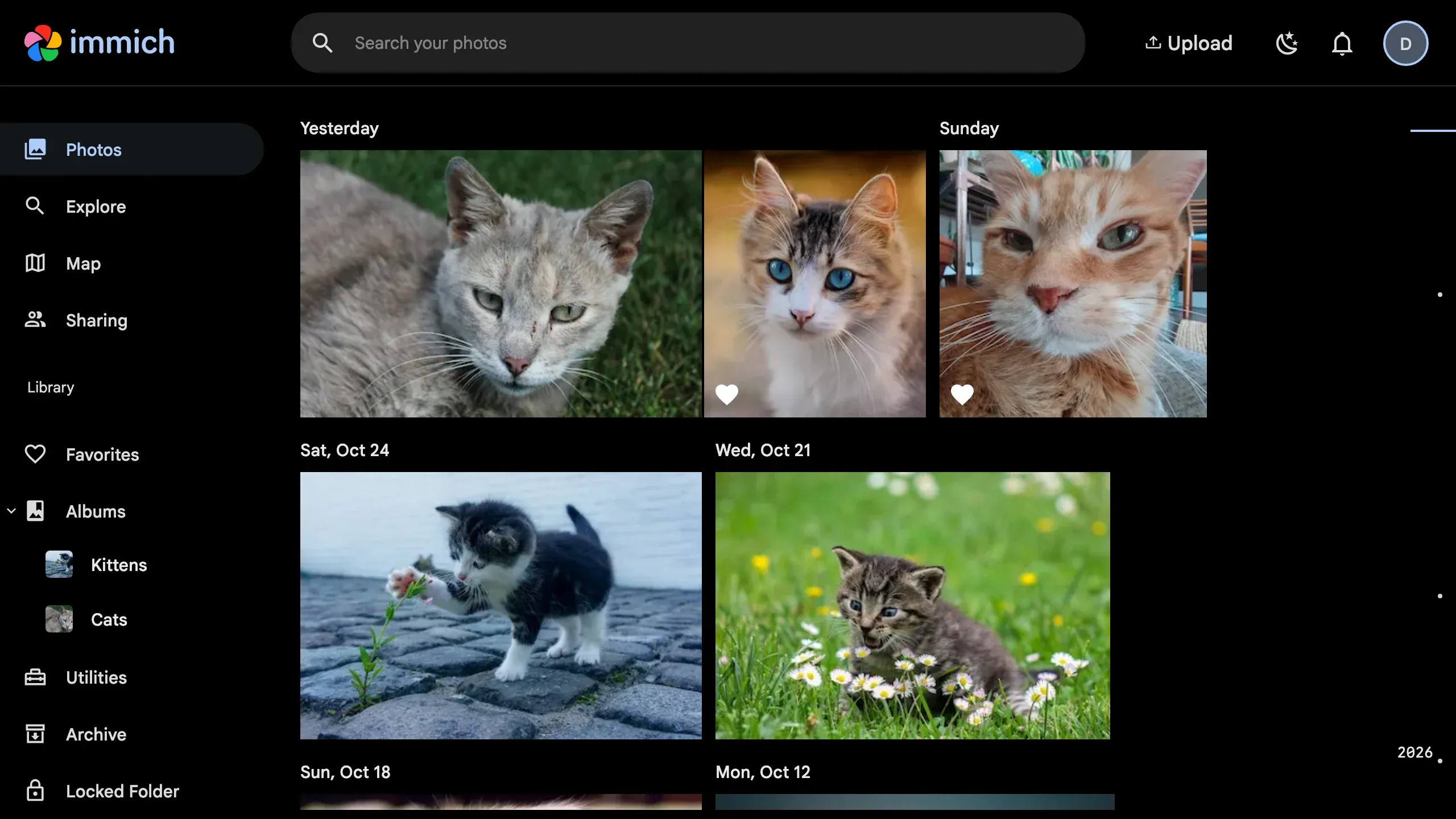
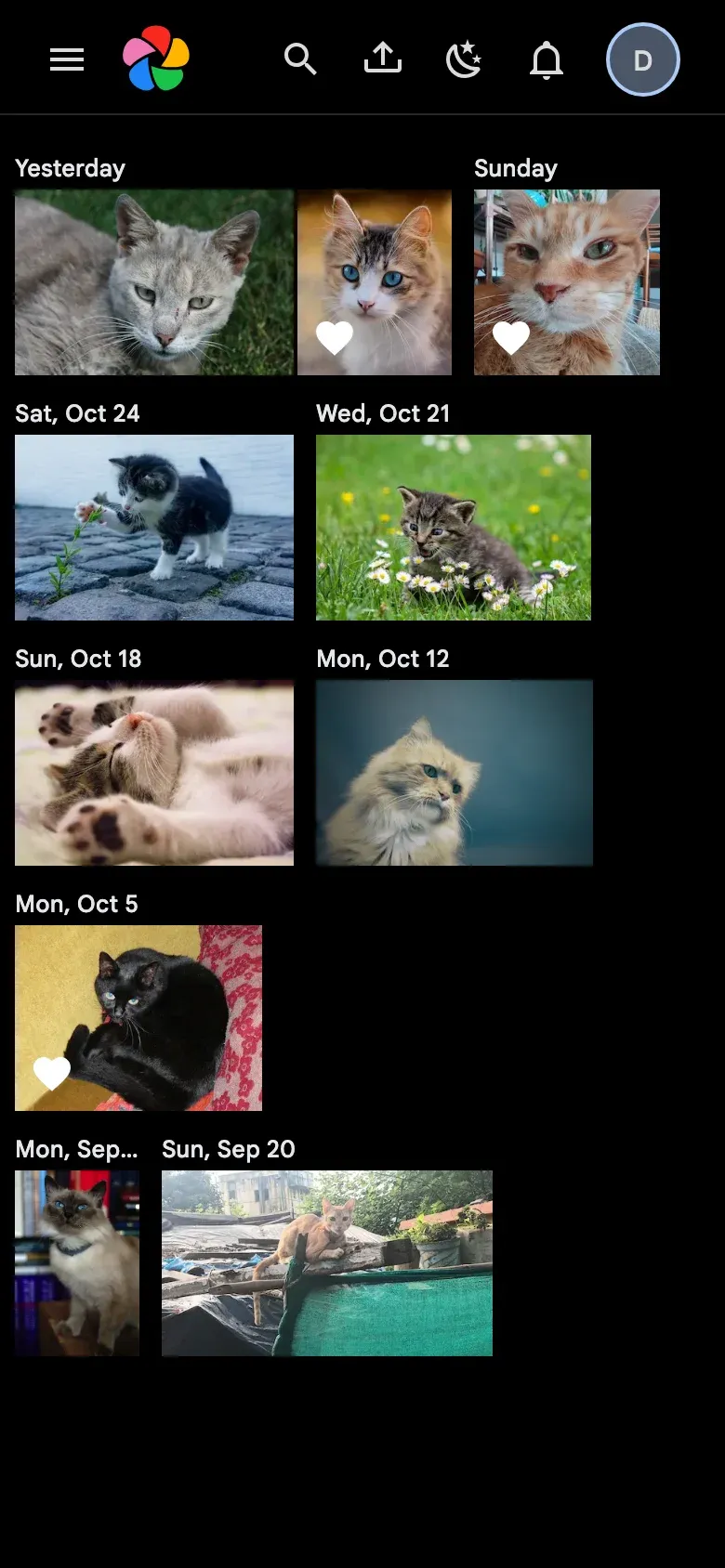
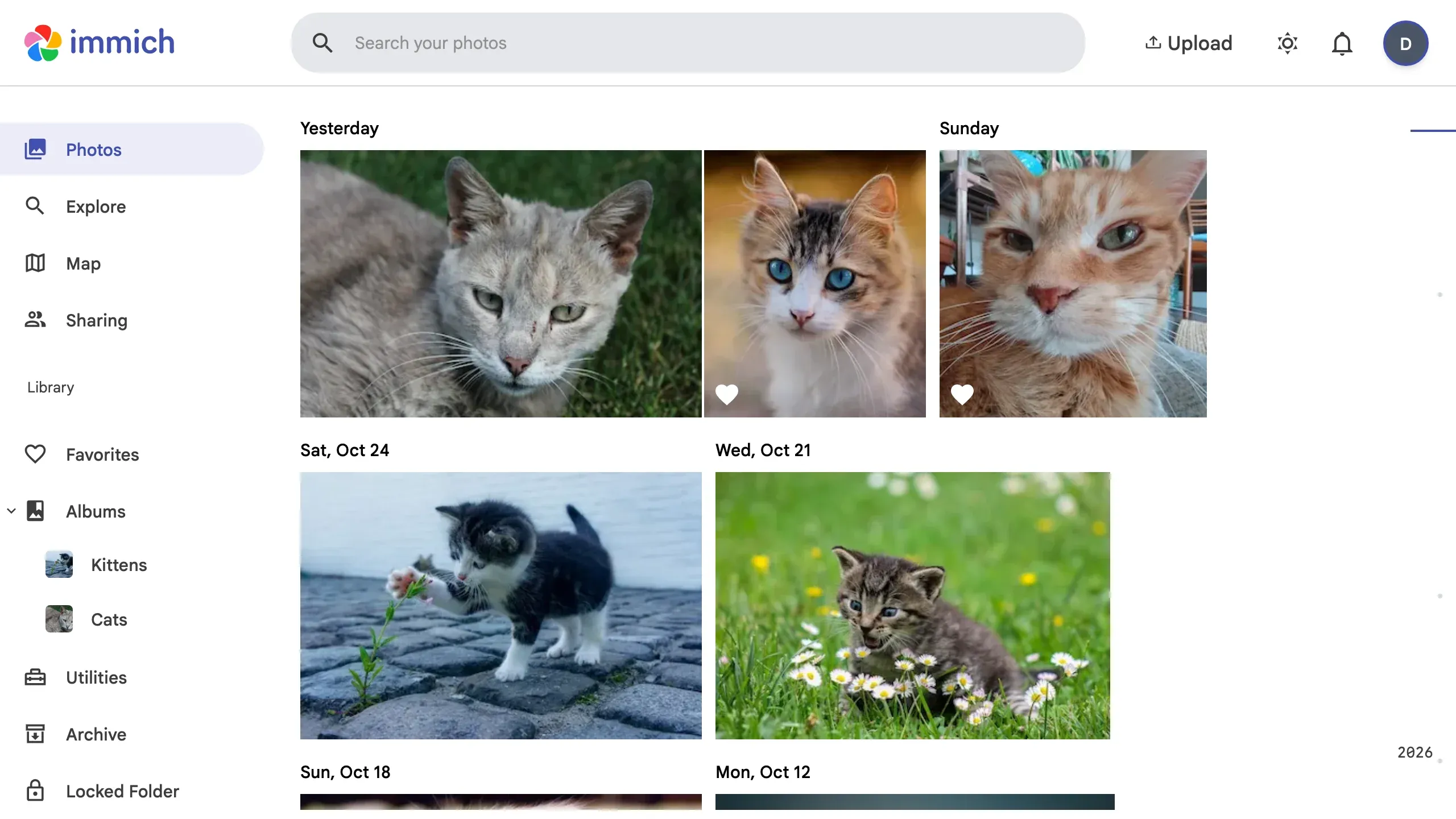
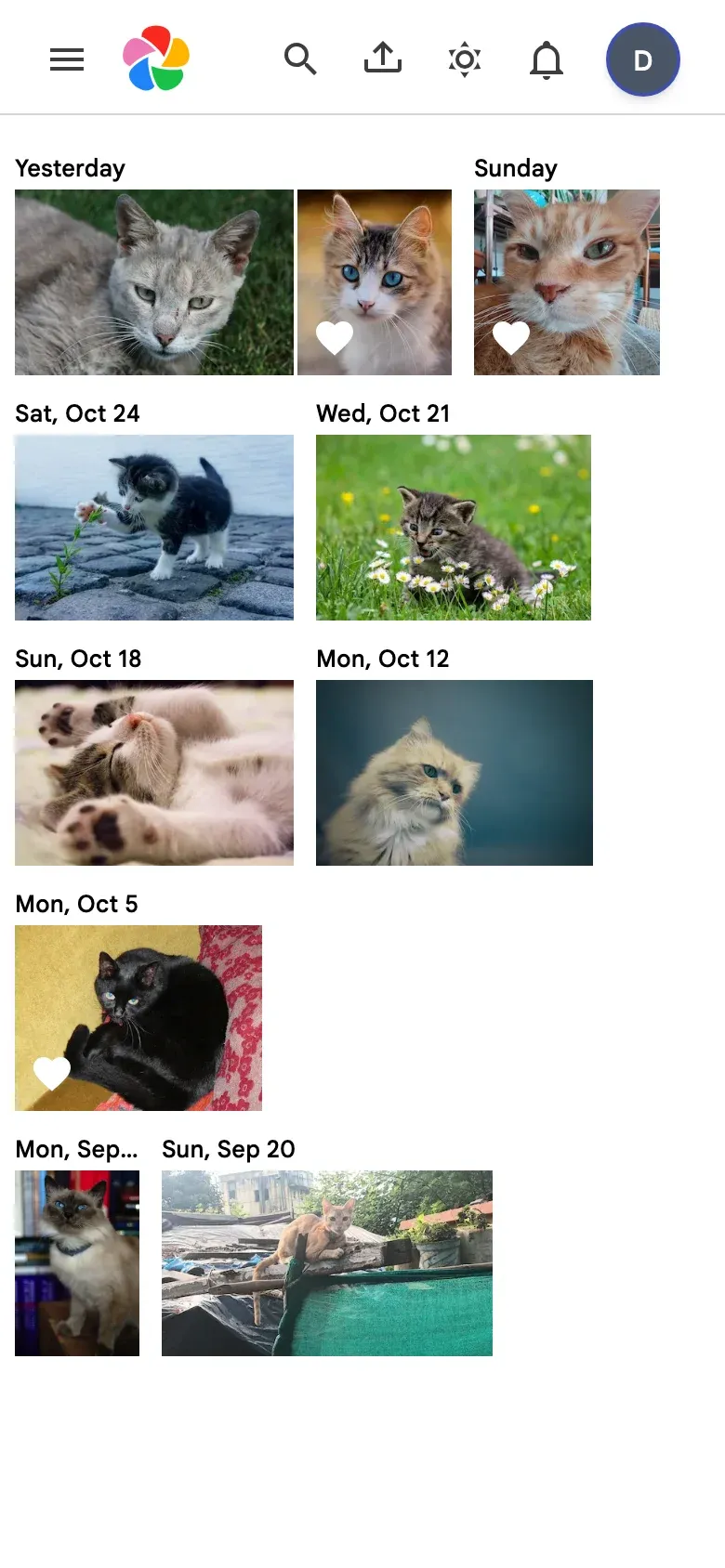
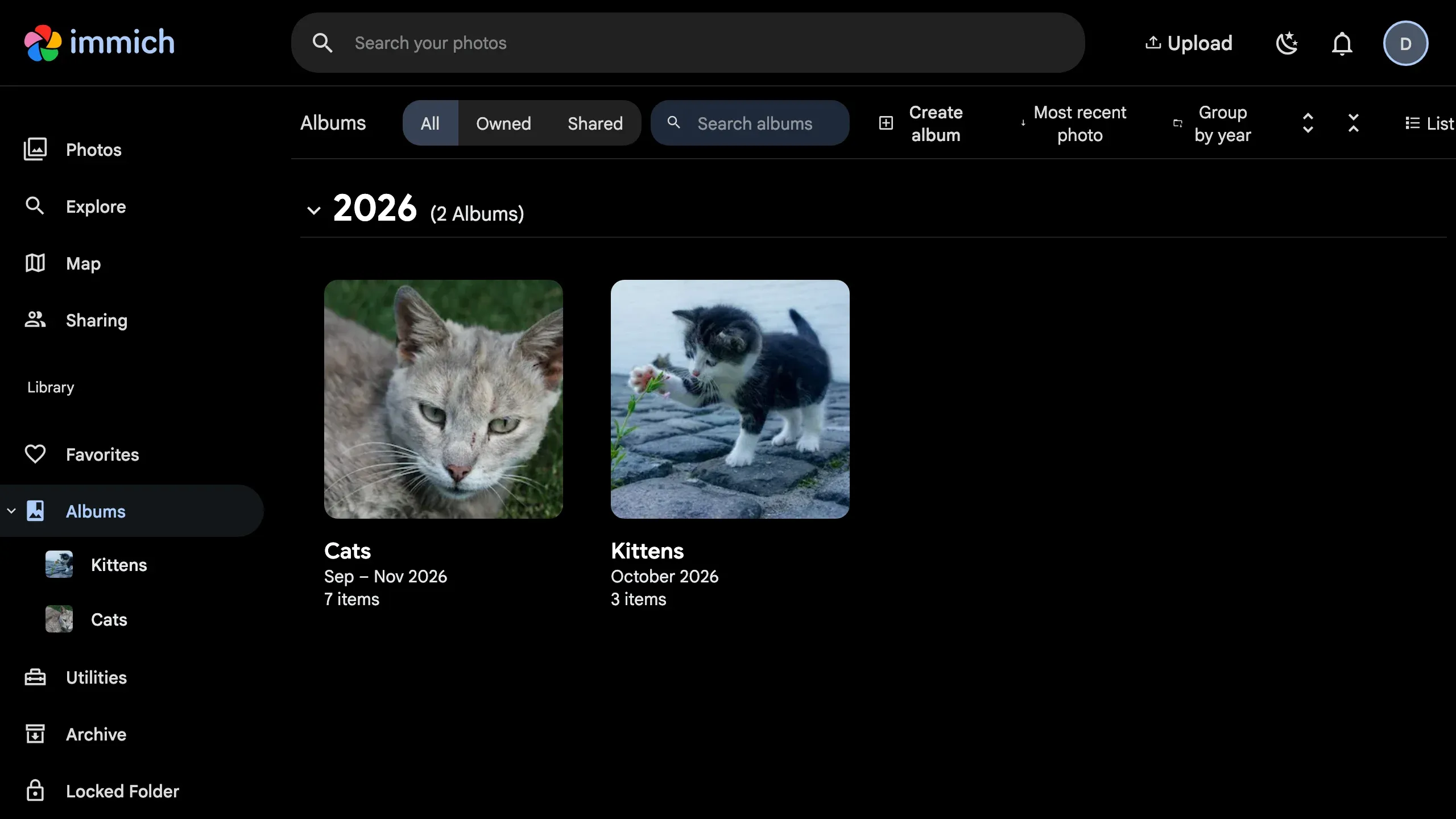
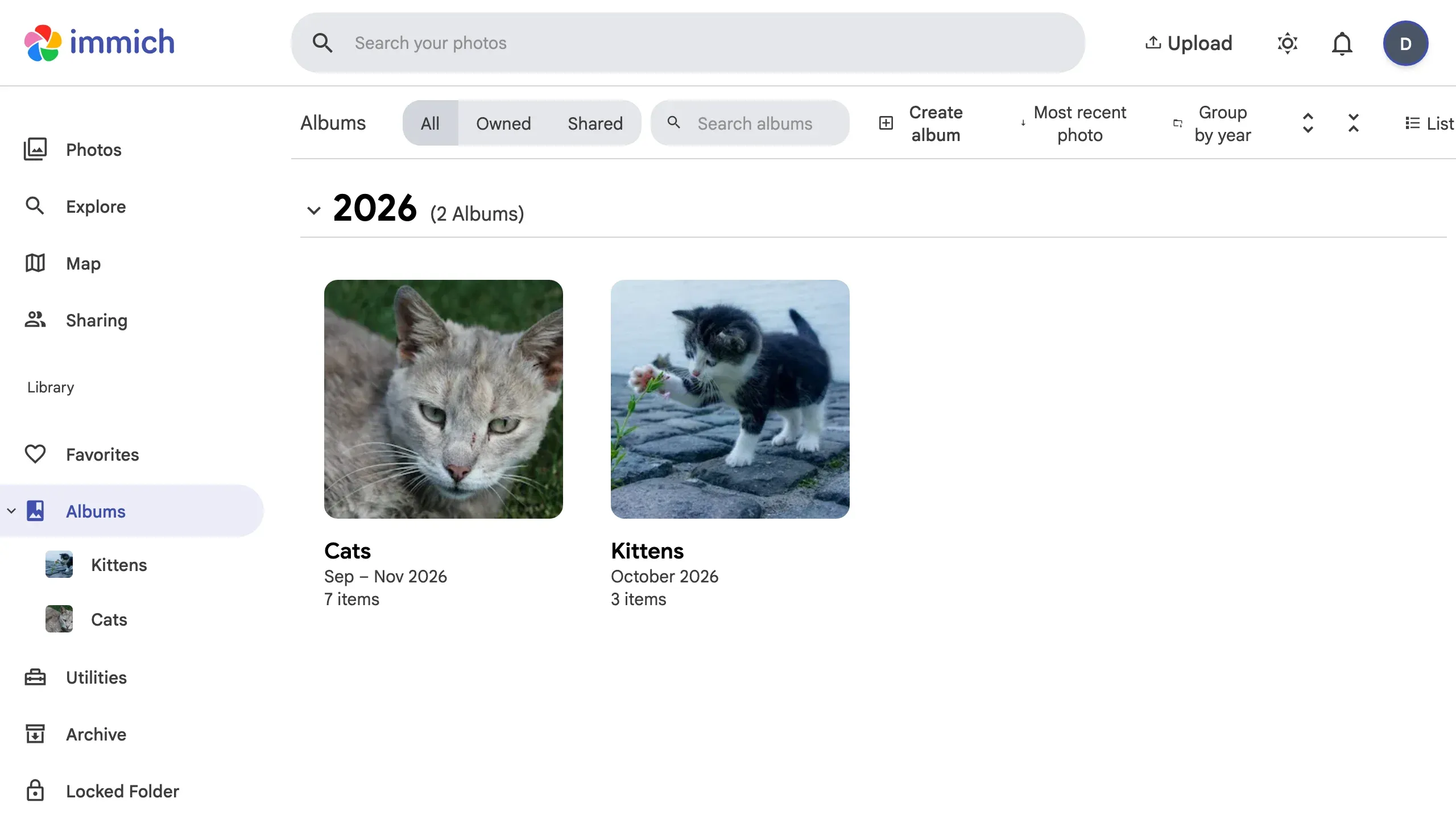
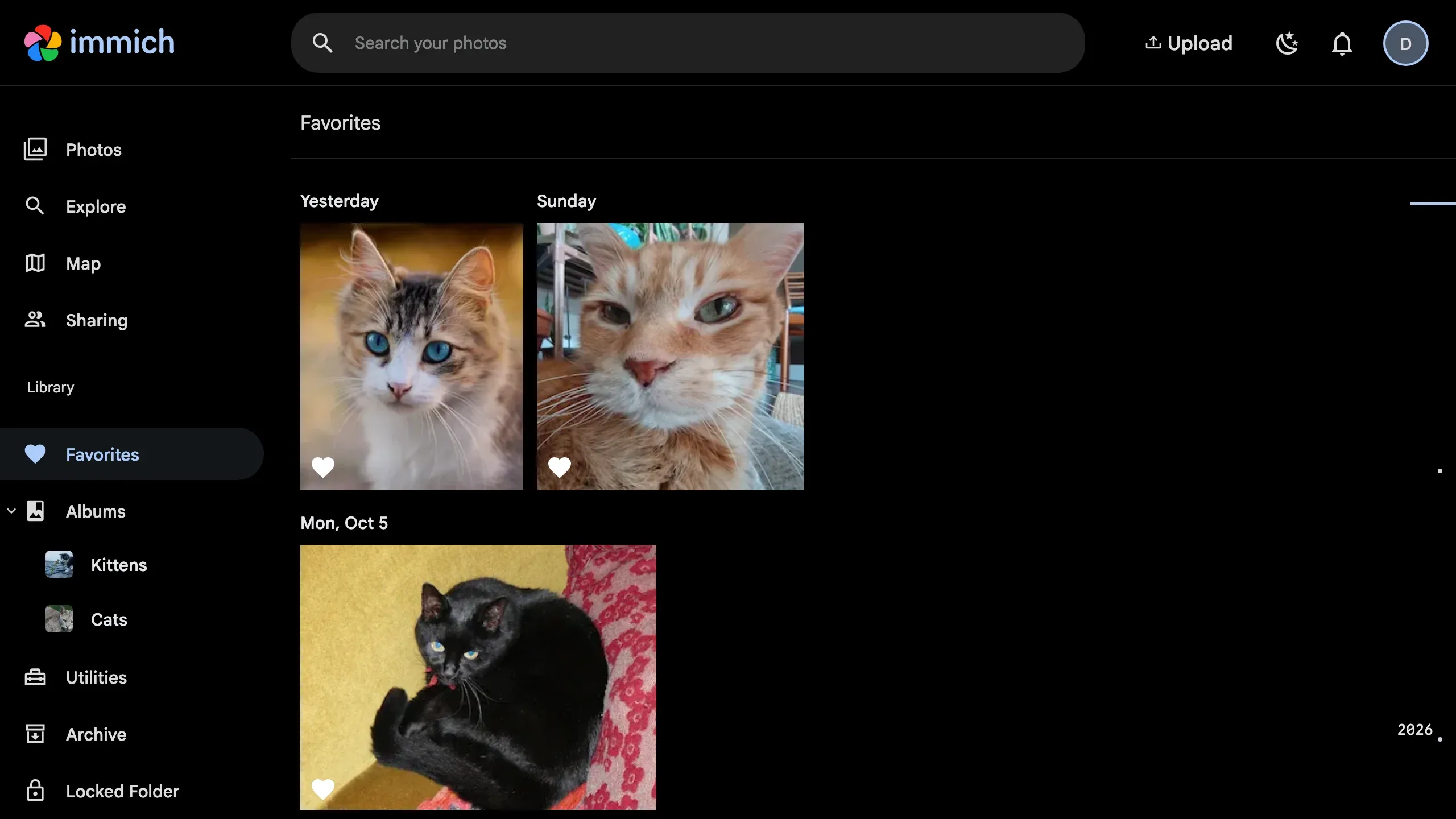

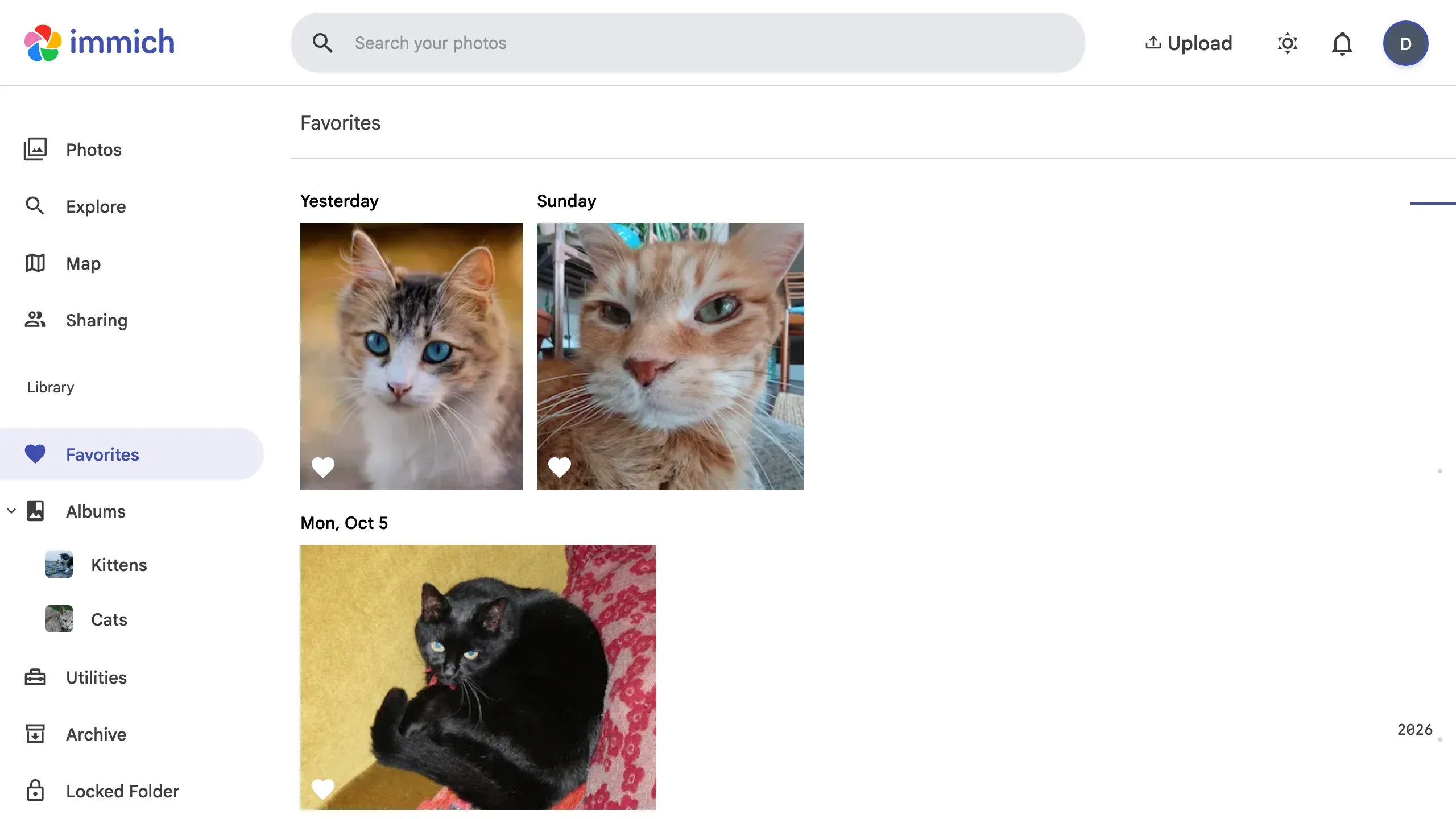

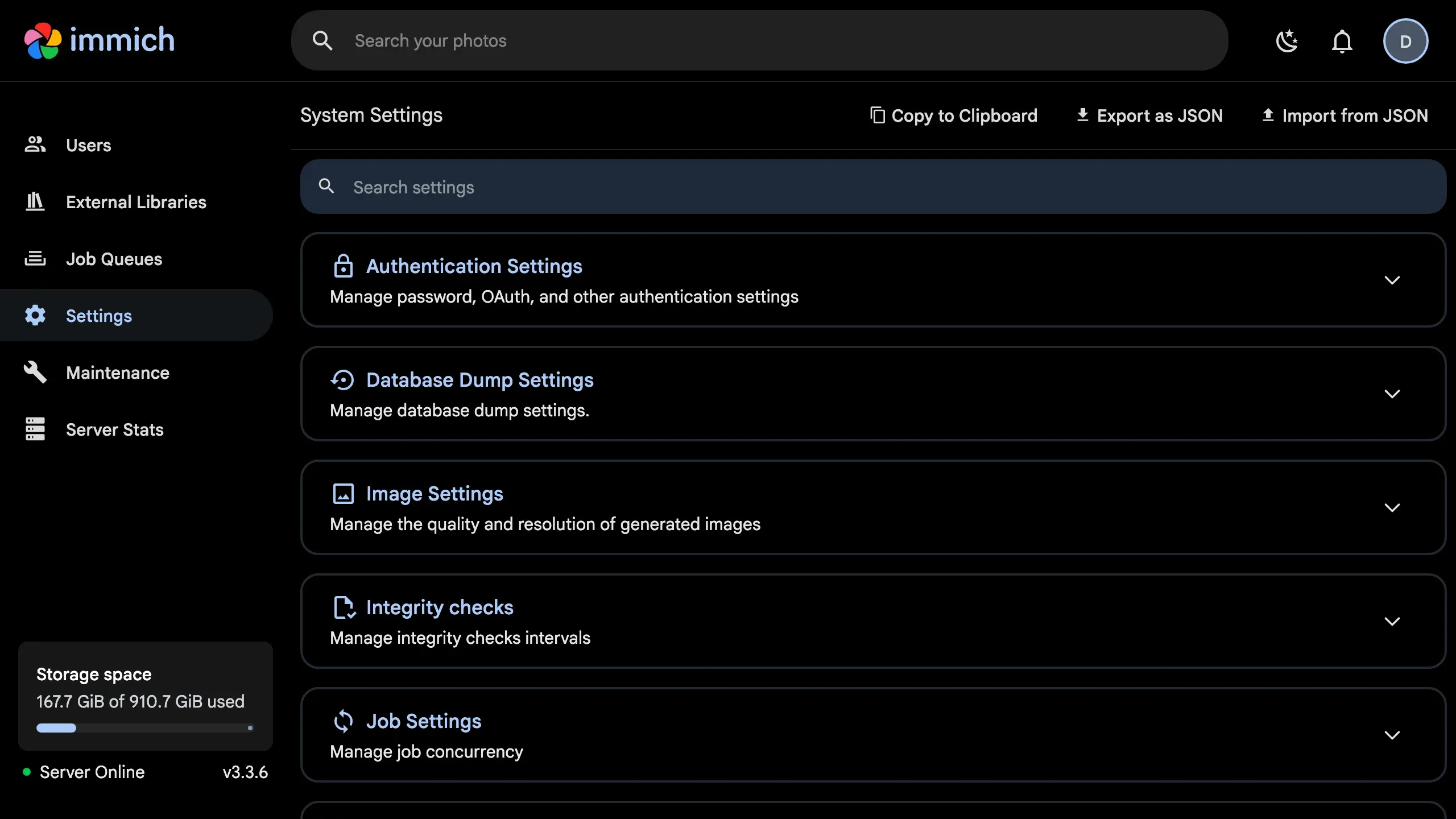
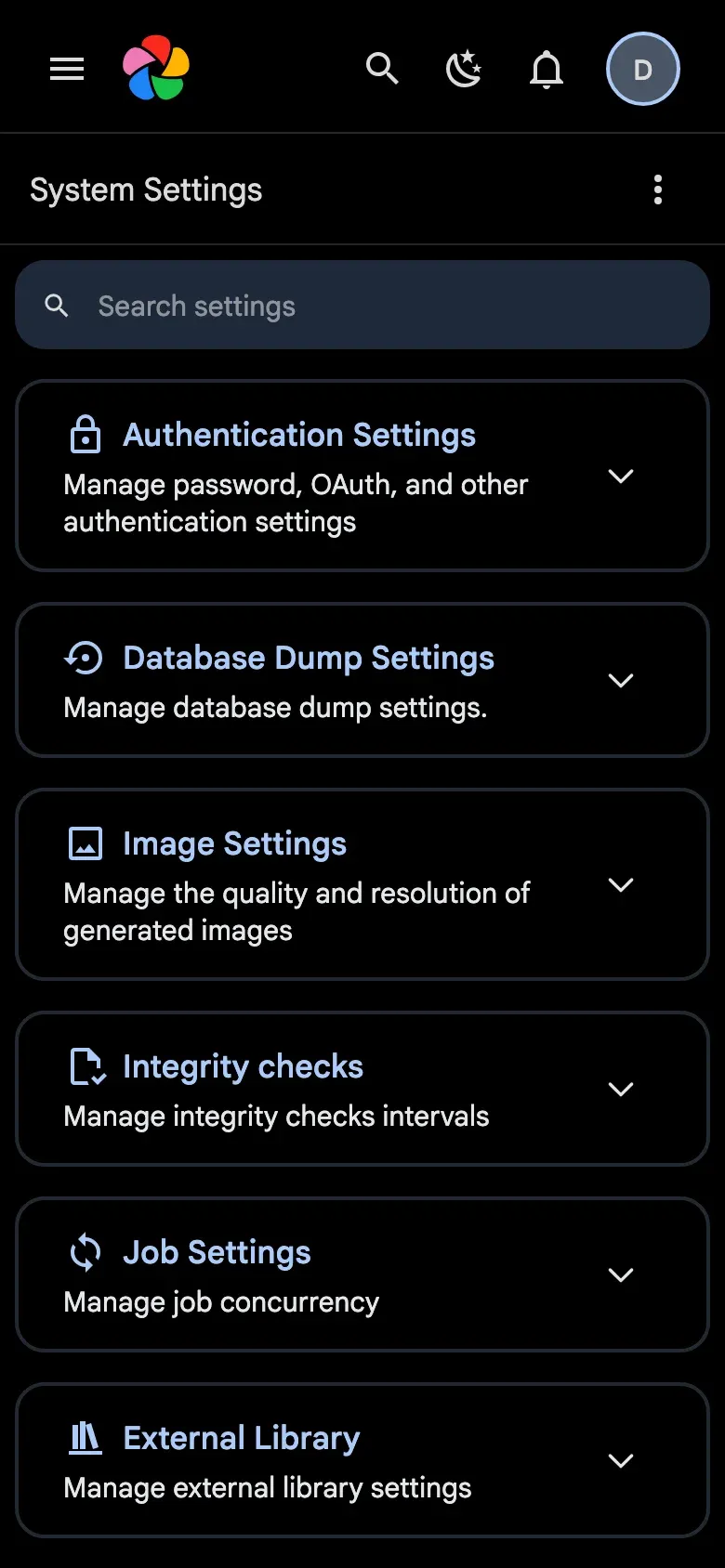
Compare Immich with other photo apps. Add or remove apps to see how they differ.
| Requirement | Immich | ||||
|---|---|---|---|---|---|
| Price | Free | Free + Paid | Free + Paid | Free | Free + Paid |
| Licence | AGPL-3.0 | AGPL-3.0 | AGPL-3.0 | MIT | AGPL-3.0 |
| Web UI | Yes | Yes | Yes | Yes | Yes |
| Minimum hardware | 2 cores · 6 GB RAM | 2 cores · 3 GB RAM | 1 core · 1 GB RAM | 2 cores · 4 GB RAM · 10 GB | 2 cores · 6 GB RAM |
| Docker Containers | 4 (app + Machine learning, Valkey, Postgres) | 2 (app, MariaDB) | 5 (app + Web app, Postgres, Object storage, socat) | 1 (app only) | 4 (app + LAN discovery, Machine learning, Postgres) |
| Database | Postgres | MariaDB | Postgres | PostgreSQL | Postgres |
| Architecture | x86 + ARM | x86 + ARM | x86 + ARM | x86 + ARM | x86 + ARM |
| Tech stack | Node | Go | Go | Python | Node |
| Docker | Yes | Yes | Yes | Yes | Yes |
| Linux package | – | Yes | – | – | Yes |
| Windows | – | – | – | Yes | – |
| iOS | Yes | – | Yes | – | Yes |
| Android | Yes | – | Yes | – | Yes |
| Windows | – | – | Yes | – | Yes |
| macOS | – | – | Yes | – | Yes |
| Linux | – | – | Yes | – | Yes |
Compare | |||||
| Full comparison | This app | Immich vs PhotoPrism | Ente Photos vs Immich | Immich vs LibrePhotos | Frameleaf vs Immich |
Official and community clients for phone, TV and desktop.
Yes. Immich is free and open source under AGPL-3.0. All features are available without payment; optional product keys support development.
For most families, yes. Immich has automatic mobile backup, albums, sharing, facial recognition, map view and search by content. Because it is under active development, read the release notes before updating and keep backups of your library.
Back up both the photo library folder and the Postgres database. The database holds albums, faces and metadata, so the photos alone are not enough. Immich also has a built-in database dump you can use.
More than most apps. The official requirements list at least 6 GB of RAM and 2 CPU cores, and recommend 8 GB and 4 cores. You can squeeze onto 4 GB of RAM with machine learning turned off, which costs you face grouping and smart search. The first scan of a large library can take hours on CPU, and a GPU speeds it up.
Export your library with Google Takeout, then upload it with the community tool immich-go. Takeout stores metadata in separate JSON files, and immich-go matches them to your photos during upload so albums, descriptions and locations carry over. Keep a backup of the export until you have checked the result.
Add-ons and companion apps that run alongside it.

Your phone, the camera and a drawer of old drives can all empty into one timeline that lives on your server. Frameleaf keeps the originals as ordinary files, recognises faces and pets on the machine, and opens the same library in the phone apps, the browser and the TV.

Browse, organise and share photos and videos privately, with automatic labels and face recognition.

Ente Photos backs up your phone's photos to a server you host and keeps the library end-to-end encrypted. One quickstart script starts the server, web app, Postgres and object storage in Docker.

Manage your photo library with machine learning, from automatic face recognition and object detection to semantic search.

Point Best Photo Picker at years of photos and it scores every frame for sharpness, exposure and faces, then hands back the best fifty of one person. Near-duplicates are folded out and the scoring runs on your own CPU.

Bring Apple Photos, Google Photos and camera files into one dated library on your own disk, then review each calendar date across every year.

Turn folders of photos and videos into a self-hosted gallery you scroll like a social feed, with reels, stories and a Places view built from the GPS tags already in the files. Originals stay where they are, a SQLite index and generated thumbnails keep it quick, and one Docker container serves the gallery to the household.
